Understanding Oil-based and Water-based Markers: Key Differences
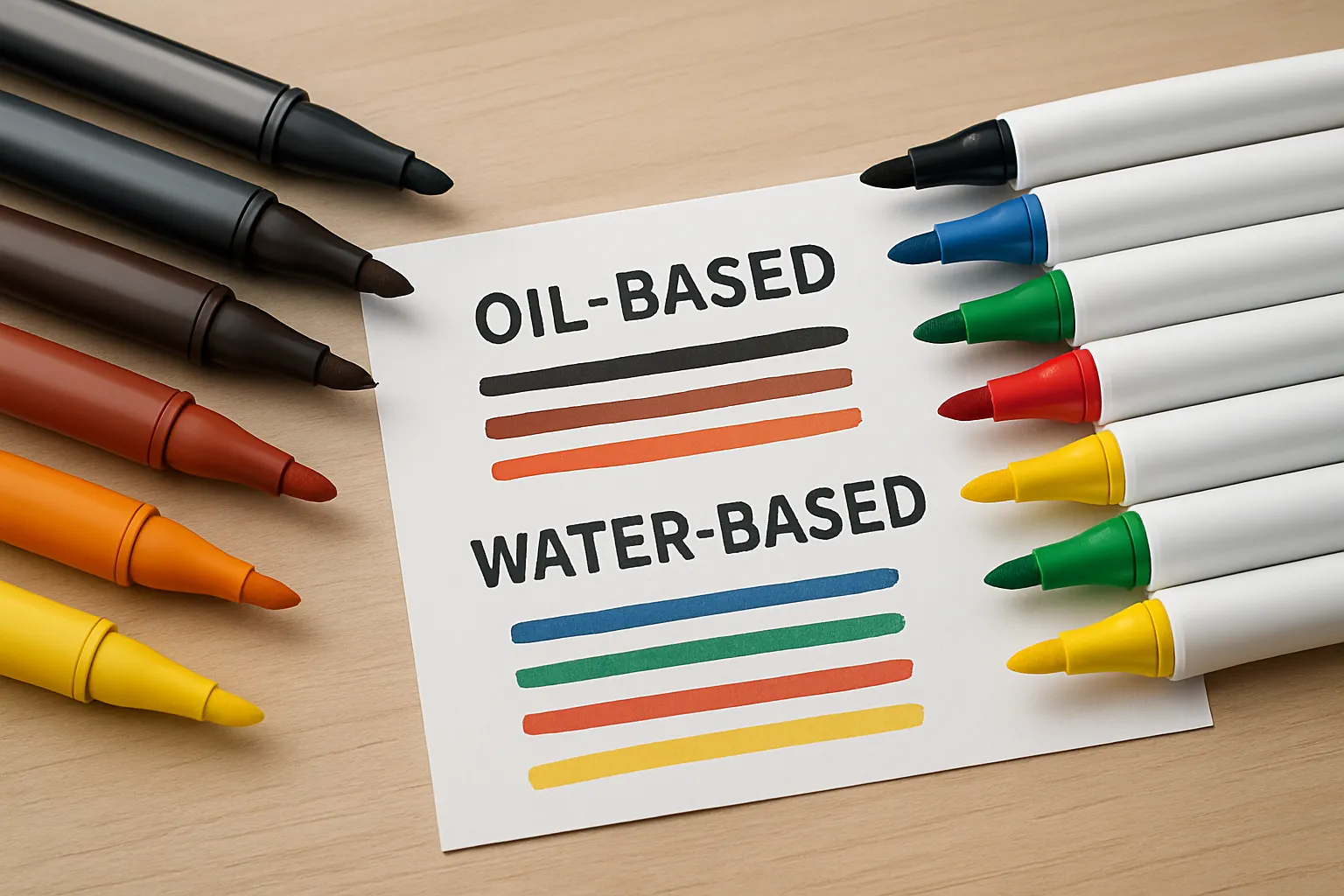
Markers serve as vital tools across various sectors, including art, design, manufacturing, and education. Among the numerous types available, oil-based and water-based markers stand out as two of the most frequently utilized. Grasping the distinctions between these two categories is essential for businesses aiming to select the most appropriate marker for their specific needs. Understanding oil-based markers and water-based markers is crucial for making informed choices.
Overview of Oil-based Markers
Oil-based markers consist of pigments suspended in an oil-based solution, offering rich, vibrant colors that adhere well to numerous surfaces. Their durability and resistance to fading make them ideal for applications requiring long-lasting results. In my experience, industries that demand high-quality, permanent markings often lean towards oil-based options.
Overview of Water-based Markers
Conversely, water-based markers utilize water as their primary solvent, making them a more eco-friendly choice. Cleanup is a breeze with water, which is particularly advantageous in educational and creative settings. While water-based markers are versatile and can be applied on various surfaces, it’s worth noting that they may not offer the same permanence as oil-based markers.
Specifications and Characteristics
Composition of Oil-based Markers
Typically, oil-based markers are made up of pigments, oils, and solvents. The oil ensures a smooth flow, allowing the pigment to adhere effectively to surfaces, while the solvent aids in application. This composition results in markers that resist water and fading, making them suitable for both indoor and outdoor use.
Composition of Water-based Markers
On the other hand, water-based markers primarily consist of water, pigments, and a small amount of binder. The water acts as the solvent, which renders these markers non-toxic and easy to clean. However, their reliance on water can limit performance on non-porous surfaces; they may smudge or wash away if not allowed to dry properly.
Drying Time and Longevity
Oil-based markers generally take longer to dry compared to their water-based counterparts. This characteristic can be beneficial for creating layered effects in artwork, but it also calls for careful handling to avoid smudging. In contrast, water-based markers dry quickly, making them suitable for fast-paced environments, although they may not be as durable over time.
Use Cases and Applications
Best Uses for Oil-based Markers
Oil-based markers excel in situations that demand permanence and vibrancy. They are particularly effective for marking on metal, glass, wood, and plastic surfaces. Industries such as manufacturing, construction, and signage frequently rely on oil-based markers for labeling and producing long-lasting graphics.
Best Uses for Water-based Markers
Water-based markers shine in applications that prioritize easy cleanup and flexibility. Commonly found in schools, art studios, and crafting projects, their ability to wash off easily makes them suitable for temporary displays or situations where corrections are needed without hassle.
Industry-Specific Applications
In the art domain, oil-based markers are preferred for creating intricate illustrations and designs that require rich color saturation. Conversely, educators often choose water-based markers for classroom activities, as they are safe for children and easy to manage. Additionally, sectors like fashion design and product development frequently utilize both types of markers for sketching and prototyping.
Comparison of Performance
Color Vibrancy and Opacity
Oil-based markers are celebrated for their exceptional color vibrancy and opacity, delivering bold, striking lines that stand out on any surface. While water-based markers come in a wide array of colors, they may not achieve the same opacity, particularly on darker surfaces.
Surface Compatibility
Regarding surface compatibility, oil-based markers can be applied to a broader range of materials, including non-porous surfaces like glass and metal. In contrast, water-based markers are best suited for porous surfaces, such as paper and cardboard, and may struggle on slick or shiny materials.
Resistance to Elements
Oil-based markers exhibit greater resistance to environmental factors, including moisture and UV light, making them suitable for outdoor applications. On the flip side, water-based markers are prone to fading or washing away when exposed to rain or prolonged sunlight, which limits their usability outdoors.
Sourcing and Availability
Where to Buy Oil-based Markers
Oil-based markers can be acquired from various suppliers, including art supply stores, office supply chains, and online marketplaces. For businesses interested in bulk purchases, collaborating directly with manufacturers or distributors can yield better pricing and availability. Explore our selection for a range of products.
Where to Buy Water-based Markers
Water-based markers are widely accessible in retail stores, educational supply shops, and online platforms. They are often sold in sets, making them convenient for schools and businesses looking to equip classrooms or creative spaces.
Cost Considerations
Typically, oil-based markers are more expensive than water-based markers due to their specialized formulation and durability. It’s essential for businesses to weigh their specific needs and budget when deciding which type of marker to invest in.
Implementation in Business Settings
Training Staff on Marker Use
Comprehensive training on the use of both oil-based and water-based markers is crucial for maximizing their effectiveness in business settings. Staff should be informed about the specific applications, techniques, and cleaning methods associated with each type of marker to ensure optimal results.
Best Practices for Storage
To prevent drying out and to maintain ink flow, markers should be stored horizontally. For oil-based markers, it’s vital to keep them in a cool, dry place to avoid oil degradation. Water-based markers should be tightly capped to prevent the ink from drying out.
Safety Considerations
When using oil-based markers, it’s essential to ensure proper ventilation, as the solvents can emit fumes that may pose health risks in enclosed spaces. Water-based markers are typically non-toxic and safe for environments with children, but it’s always wise to review any specific safety guidelines provided by the manufacturer.
Frequently Asked Questions
Are Oil-based Markers Toxic?
Oil-based markers may contain solvents that can be harmful if inhaled or ingested. It is crucial to use them in well-ventilated areas and adhere to safety guidelines provided by the manufacturer. For more information, refer to this industry reference.
Can Water-based Markers Be Used on Non-Porous Surfaces?
While water-based markers can be used on non-porous surfaces, their performance may be compromised. They are best utilized on porous materials, as their application on non-porous surfaces can lead to smudging or fading.
How to Choose the Right Marker for Your Needs
Selecting the right marker depends on the specific application, surface material, and desired permanence. For long-lasting, vibrant results on various surfaces, oil-based markers are the go-to choice. For temporary projects or educational use, water-based markers are more appropriate.
Conclusion
Understanding the differences between oil-based and water-based markers is crucial for businesses looking to enhance their marking and labeling processes. Each type of marker possesses unique characteristics, advantages, and applications, making them suitable for different environments and industries. By thoughtfully considering the specifications, performance, and intended use, businesses can make informed decisions that improve their operations and creative projects.