

Highlighter Packs: Reconcile Colors and Unit Counts

Define highlighter pack contents with a color-by-color matrix and reconcile the number of pens, sets and cartons. Assign a version to the packing sheet and label artwork, then compare a packed sample against both. Treat catalogue color names as identifiers until the buyer has approved physical samples and the final assortment.
For wholesale highlighters, total quantity alone does not describe an order. A buyer may receive the right number of pens but the wrong proportion of colors or an incorrect set label. A simple packing sheet connects the assortment that was approved with the units that will be packed, labelled and received.
1. Establish the product and color reference
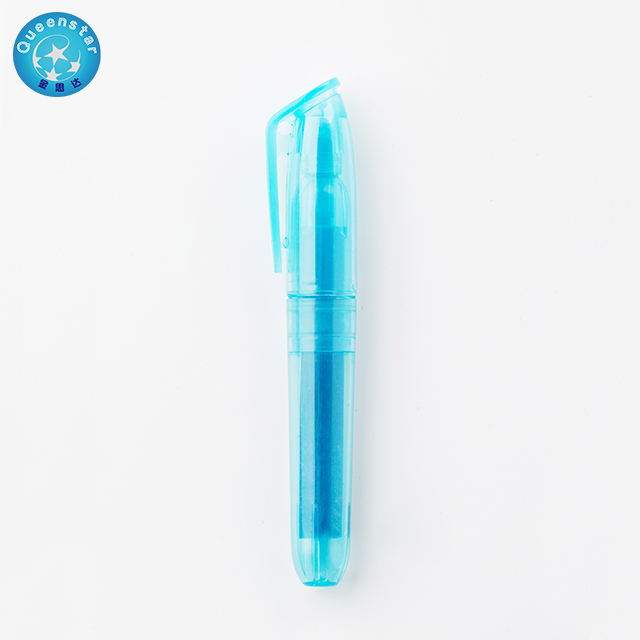
The QS-288 product page identifies a mini highlighter and lists yellow, orange, pink, purple, sky blue and apple green. It also lists PP material and dimensions of 88 × 12 mm. Use the model and named colors to begin the packing conversation, then confirm that the actual sample matches the required specification.
Create one buyer reference for each color and link it to a labelled physical pen. The catalogue photograph is useful for identifying the family, but a screen image is not an exact shade standard. If the supplier uses another code, record both codes side by side so the packing team does not have to translate informal color descriptions.
- Model plus buyer and supplier color codes
- Each set identifier and pens per color
- Set-to-carton unit conversion
- Final artwork revision and named approver
2. Write an explicit set-content matrix
Give every intended set its own identifier and list how many pens of each color belong inside. Distinguish a mixed set from a single-color pack. If the buyer requests a six-color example, write one pen per named color only when that is the actual requirement. Do not infer a standard retail assortment from the group photograph.
Add a total-per-set field and compare it with the number stated on the proposed label. Repeat the calculation for each set variant. A promotional kit with extra pens and a standard assortment should have different identifiers even if they use the same marker model. This keeps future reorders from borrowing the wrong packing instruction.
| Check level | Required record | Reconciliation question |
|---|---|---|
| Individual pen | Model and linked physical color sample | Does the working code identify this pen? |
| Set contents | Count of every named color | Do the rows sum to the stated set count? |
| Carton contents | Number of sets and any loose units | Does the conversion match the order? |
| Label approval | Version, owner and packed sample | Does the artwork describe these contents? |
| Receiving record | Observed quantities and discrepancy photos | Can a mismatch be traced to a set and carton? |
3. Connect individual units to outer quantities
Ask the supplier to state how sets are arranged in any inner or master carton and to confirm the final packing data. Keep the units visible in every field: pens per set, sets per inner pack and inner packs or sets per carton. The available packaging must be confirmed for the actual order rather than assumed from a catalogue layout.
Calculate the required total of each color across all sets and compare it with the order quantity. If loose spare pens are requested, give them their own line and label instruction. Record any supplier-proposed adjustment separately. A rounded carton total should not silently increase one color while leaving the assortment label unchanged.
4. Review labels beside a packed sample
Place the proposed label next to a physically assembled sample and check model, set identifier, color contents and stated count together. Record which artwork revision was reviewed. Ask the buyer’s responsible person to confirm required language and any destination-specific information before print approval. A packing sheet is not a substitute for a market compliance review.
Do not copy unverified safety or non-bleeding claims from sales descriptions into artwork. Where such a claim is requested, identify the evidence and review owner separately. Product appearance, pack count and claim approval are different decisions. A correct six-pen count does not prove ink performance on every paper or suitability for every age group.

5. Keep a receiving check that follows the same units
Retain the approved packed sample, final matrix and label file together. Ask the supplier to reference that revision in its packing confirmation. Agree how the shipment will be checked and how discrepancies will be recorded before dispatch. The inspection scope and sampling plan should be explicit; this article does not prescribe a universal acceptance rate.
At receipt, record the carton identifier and compare the observed contents with the same set matrix used for approval. Photograph any mismatch with the set label and affected pens visible. Use the stationery buying guides for wider sourcing context, but keep the evidence for this particular assortment in its own purchasing file.
Frequently Asked Questions
Does the six-color photo promise a six-pen retail set?
No. It displays the catalogue colors. Confirm the actual set contents, pack format and availability with the supplier for the specific enquiry.
Can sky blue and blue share one working code?
Use an unambiguous reference agreed with the supplier. If two descriptions refer to the same approved sample, record the mapping rather than relying on a verbal assumption.
Are the catalogue dimensions a carton specification?
No. The QS-288 page lists product dimensions. Ask for the packing dimensions and quantities of the proposed inner and master cartons separately.
What if a set has the right count but a repeated color?
Record it as an assortment discrepancy against the approved matrix. Show the label and actual contents together and request the agreed correction through the purchasing process.
Send your model, set-content matrix and draft label through the contact page to discuss packing scope. Review the product catalogue before assigning identifiers to different highlighter models.