
QS-288 RFQs: Separate Pen and Ink Weight
The QS-288 listing separates Weight: 5.45 g from Ink Weight: 1.2 g. Keep these as two supplier-published fields and ask what each measurement includes. Confirm the complete-pen condition, the basis of the ink figure and any agreed tolerance before using either value in an order or receiving check.
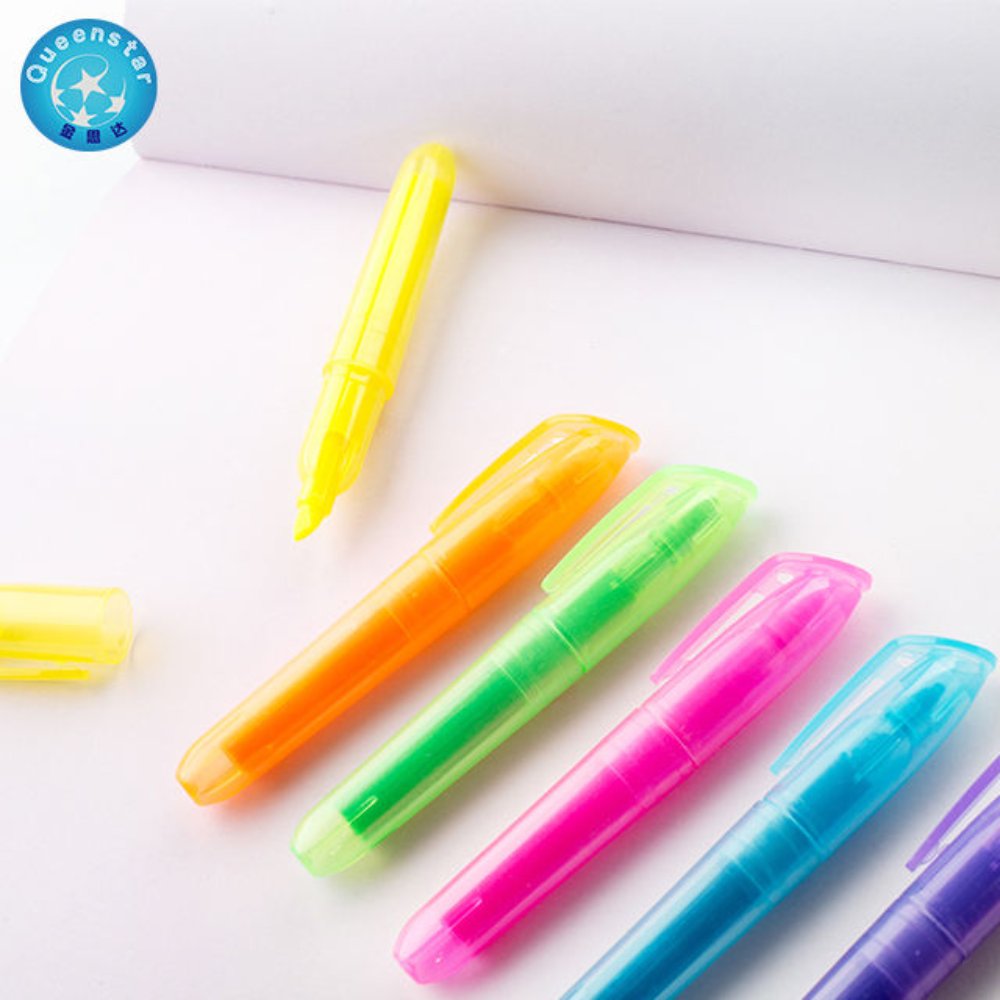
Official QS-288 catalogue view with capped and uncapped presentations. The image helps identify the product and why cap condition should be stated; it is not a weighing result.
Read the two weight lines separately
Jinsida Stationery’s QS-288 product page lists a mini highlighter with “Weight: 5.45 g” and “Ink Weight: 1.2 g.” Those two entries answer different questions. A buyer comparing wholesale highlighters should preserve both field names instead of copying one number into an undifferentiated product-weight column.
The page also lists PP material and dimensions of 88 × 12 mm. These supplier-published details help identify the model, but the inspected description does not explain the weighing condition or tolerance behind either weight. The useful procurement task is to ask for that missing basis and connect the response to the proposed product version.
Define the complete-pen condition
Ask what the supplier includes in the 5.45 g weight. Does it describe a filled, complete pen with its cap in place, or another stated condition? Ask whether any individual wrapping or accessory is excluded. Write the answer beside the number, with the unit, so that the same field remains understandable when it moves from the quotation to a receiving sheet.
The gallery includes capped and uncapped presentations. That makes the cap an obvious point to clarify, rather than a detail for the receiving team to guess. A review that weighs an uncapped unit should not be compared directly with a supplier figure defined for a complete capped pen. Resolve the sample condition before deciding whether two observed values differ meaningfully.
Identify the model, colour and sample reference.
State whether the pen is filled, complete and capped.
Separate the pen from individual wrapping and outer packaging.
Record the supplier’s stated basis and any agreed tolerance.
Another QS-288 gallery view shows caps beside the pens. Catalogue staging does not define what the published 5.45 g weight includes.
Keep the ink figure in its own enquiry field
For the 1.2 g ink entry, ask whether the figure is a nominal fill quantity, a measured sample result or another defined value. Request the relevant proposed product reference and ask how the supplier establishes the figure. The buyer can then decide what supporting information is needed without treating a short catalogue line as a complete production instruction.
Do not subtract the two published numbers and call the result a verified empty-barrel weight. That calculation assumes that the measurement conditions align and that the remaining components have been defined. Neither assumption is established by the inspected page. Similarly, ink mass is not a stated liquid volume; keep grams and any separately requested volume information in distinct fields.
Use a short weight-basis table
The table below preserves what the page actually says and shows what remains to ask. It does not provide a tolerance or a test result. Send the unfinished fields to the supplier, and retain the response with the quotation rather than replacing the published wording without an explanation.
Field
Published starting point
Confirmation needed
Product weight
5.45 g
Included parts, fill and cap condition
Ink weight
1.2 g
Nominal or measured basis and scope
Variation
No tolerance stated on inspected page
Agreed range and review method if required
Packing weight
Separate from these product fields
Actual packing level and included contents
The product gallery supplies a related tip-and-cap reference. Neither the visible tip nor the photograph establishes the 1.2 g ink amount or a writing-distance result.
Make sample comparisons repeatable
If the buyer plans a weight check, agree the item condition and method before using it as an acceptance decision. Record the sample identity, included components, equipment used and observation. When several units are reviewed, keep the individual observations available rather than reporting only one average that hides differences.
A complete-pen weight check does not by itself isolate the ink quantity. Ask the supplier for an appropriate way to support that separate requirement rather than presenting the complete mass as direct fill evidence. Keep the result limited to what was actually observed and documented. A discrepancy should be investigated against the same defined condition.
Separate packing estimates and writing claims
For logistics planning, request the actual proposed packed weight at the relevant level. Multiplying a product-weight entry does not include the mass of wrapping, trays or cartons. Keep the confirmed product basis available for reference, while asking the supplier to state the packing data for the arrangement being quoted.
The ink quantity also does not establish a writing distance or working life. If the buyer needs a writing-performance requirement, define it separately and ask for relevant evidence and conditions. Close the enquiry with the model, two weight fields and resolved bases, then send outstanding questions through the supplier contact page.
QS-288 weight questions
Does 5.45 g include the cap?
The inspected page does not define that condition. Ask the supplier and write the confirmed answer next to the product-weight entry before comparing a sample against it.
Does 1.2 g state a writing lifespan?
No writing-distance result is established by that mass field. Keep ink quantity and writing-performance evidence as separate requirements.
Can these figures be used as carton weight?
Request packing weight separately, including the stated contents and packaging level. The page’s product and ink entries do not define a packed carton.
QS-288 HighlightersInk WeightProduct Specification