
QS-Art RFQs: Define Both Writing Widths
A QS-Art marker enquiry should specify the fine and broad ends separately. Ask the supplier to identify each nib, distinguish its physical dimensions from its writing width, and explain the method behind any stated stroke figure. Keep the two responses linked to the offered marker version and sample before accepting a single fine/broad description as the specification.
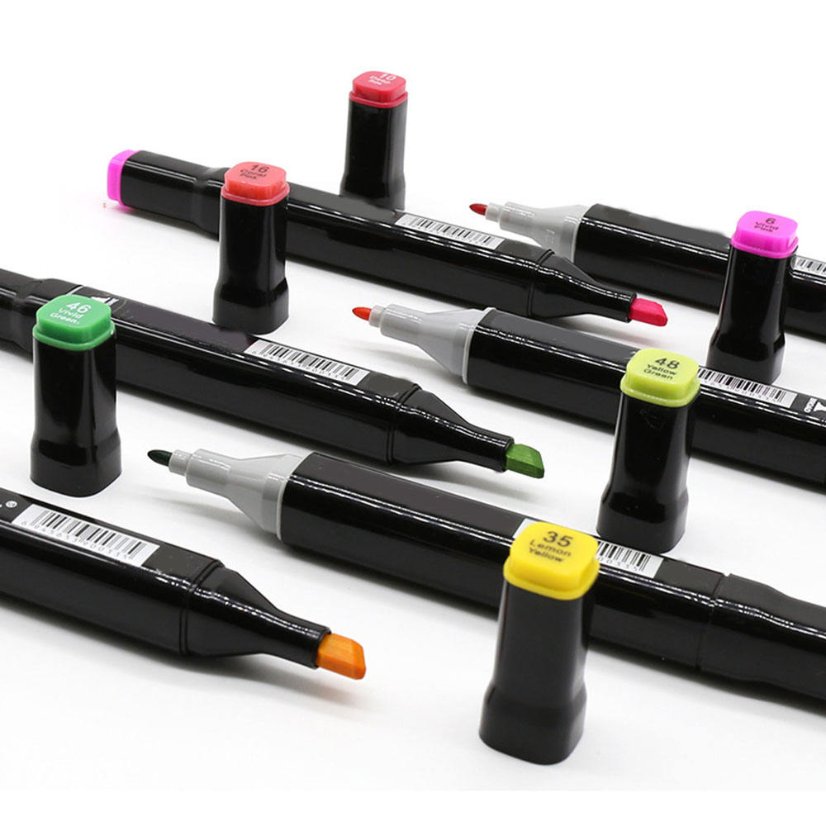
Official QS-Art gallery reference showing different exposed marker ends. Use it to identify the fine and broad positions before asking the supplier to define each writing width.
Start with the actual dual-tip description
Jinsida’s QS-Art Marker Pen page identifies a dual-tip design and describes fine and broad tips in one pen. It lists dimensions of 160 × 15 mm, but it does not publish a separate writing-width value for each end. That leaves a specific question for a wholesale markers buyer preparing the offer comparison.
Keep the overall dimension entry separate from the nib questions. Ask the supplier to name the measurement points for its dimensional information rather than reading either published number as a stroke width. Fine and broad are useful identifiers, but they do not provide a numerical width definition by themselves.
Give each end its own specification fields
Mark the two ends on the selected reference and ask the supplier to confirm which is described as fine and which as broad. Request its current nib description for each. Use the same end identifiers in the quotation, sample comments and any returned detail images so a response cannot be attached to the wrong end.
Field
Fine end
Broad end
Nib identity
Supplier description and reference
Supplier description and reference
Physical nib dimension
Named geometry and endpoints
Named geometry and endpoints
Writing-width statement
Value or range with its meaning
Value or range with its meaning
Reference method
Conditions behind the figure
Conditions behind the figure
A separate gallery scene shows an uncapped broad end beside the assortment. The scene identifies the enquiry reference; it does not provide a measured stroke width or additional approved sample.
Separate nib geometry from the resulting mark
A physical nib dimension describes the component. A writing-width statement describes a mark made under stated conditions. Ask the supplier which meaning applies to every returned value. If it supplies a nib width or diameter, retain that label instead of entering the figure into an unlabeled line-width column.
For the broad end, ask which nib face or edge is associated with the proposed writing-width figure. Request a marked drawing if the orientation is unclear. This avoids comparing a broad-face description in one offer with an edge-width description in another while treating them as equivalent.
Ask what the stated writing width represents
Ask whether a returned figure is nominal, a range or an observation from an identified sample. Request the supplier’s description of the paper or other reference medium, nib orientation and application method used. Keep the conditions beside the number rather than assuming a single width applies to every way of holding the marker.
If two supplier responses use different methods, ask for clarification before comparing the figures directly. The enquiry can request a common reference method, but the supplier needs to confirm what it can provide. Any required acceptance limits should be agreed separately for the actual order.
Ask the supplier to distinguish its typical value from a proposed acceptance limit. If it gives a range, clarify whether that range describes nib orientation, normal variation or a requested tolerance. Those meanings affect the comparison and should remain written beside the quoted end.
Cap labels help identify which pen accompanies the width enquiry. They do not specify the dimensions of either nib or replace a separately defined writing-width response.
Keep sample comments tied to the correct end
A sample approval checklist for markers should identify the received QS-Art version and its fine and broad ends. Compare the supplier’s descriptions with the correct end reference. Where a buyer requests width observations, use the agreed conditions and name the end associated with each result.
Identify the marker and sample revision.
Keep fine and broad responses separate.
Label nib dimensions and writing widths distinctly.
Retain the method behind each width statement.
A close photograph can help resolve which nib is under discussion. It cannot supply a missing numerical width by itself. Ask for the specific information still needed and keep an unanswered field open, rather than borrowing a value from another marker with a similar-looking end.
Carry both end references into the quotation
Attach the accepted two-end specification to the quotation and identify its revision. If a later proposal changes a nib or its description, ask which writing-width statements and reference conditions need updating. Keep the unchanged end identifiable while reviewing the affected one.
The RFQ can read: “For the offered QS-Art marker, please identify the fine and broad nibs separately. State any physical nib dimensions and writing-width figures with their definitions and reference methods.” Send the request through the supplier contact page with the actual product link.
Keep the evidence boundary clear
The catalogue establishes the named dual-tip reference, not independently measured nib or stroke widths. No marker was measured or used for this article. Images and width descriptions do not establish drying time, blending results, permanence, surface compatibility, safety or material composition. Request any required product-specific evidence separately; a two-end specification is not approval of every application described in promotional text.
Frequently asked questions
Does 160 × 15 mm state the writing widths?
The page does not label those numbers as end-specific writing widths. Request the separate definitions.
Can nib width and stroke width share one field?
Keep them distinctly labeled so a component dimension is not mistaken for a mark result.
What should identify a broad-end width?
The actual end, nib orientation, value meaning and supplier’s reference method.
QS-Art markerfine and broadwriting widthsRFQ